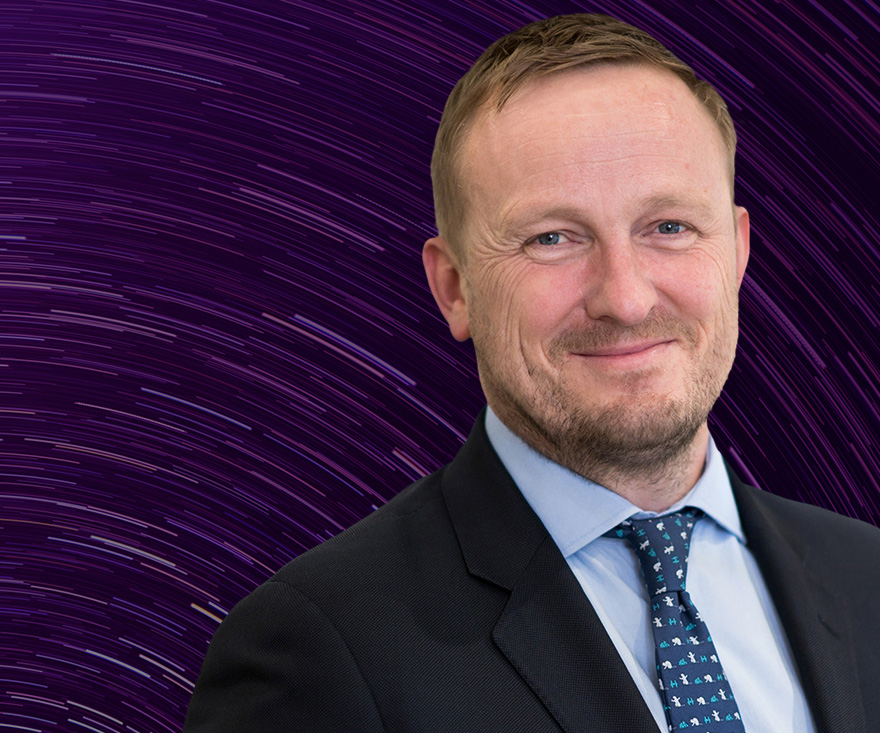
Hiten Patel: Thank you for joining us on today's episode of the Innovators Exchange. Today I'm co-hosting with my fellow partner and colleague, Harriet Roberts, and we are delighted to welcome Daniel Maguire. Daniel is the group head of LSEG [London Stock Exchange Group] markets and the CEO of LCH [London Clearing House Group]. Welcome, Daniel.
Daniel Maguire: Yes, Hiten, thanks for having me here. Harriet, good to see you as well. Thanks for inviting me along.
Hiten: Why don't we start down with just an intro to your current role at the London Stock Exchange Group and just explain for listeners kind of what's in your remit, and what you cover.
Daniel: I get the feeling we may say London Stock Exchange Group a few times. So maybe we should use LSEG, it's quite a mouthful. So yeah, my role here. I've been with the firm in various guises. I joined LCH many years ago, which became part of the group. I'm sure we'll get on to that but my role and responsibilities today, so we took the decision to amalgamate what we historically called LSEG capital markets and post trade, put those two things together and refer to it as LSEG markets.
So very simply put, that is from the Exchanges and the London Stock Exchange classic, the FX [Foreign Exchange market] trading venues, FXall, FX Matching, etc, through to our post trade businesses, like the clearing business, LCH, the various different entities we have there, the regulatory reporting, trade surveillance and all those elements. So really, when you put it all together, it's basically all of the businesses that are really the sort of financial market infrastructure elements of LSE group of LSEG. Sort of, you know, from pre, at and post-trade is probably the simple way to put it. And in addition, I have the hub for LCH group as a CEO of that as well. But really the operating entities have their running CCPs [Central Counterparty Clearing House] and CCOs [Chief Commercial Officers] in those.
Hiten: Awesome. There's a lot there, and we'll get stuck into that later in the conversation. But I always like to start by inviting leaders to talk and explore a little bit about their journey to their leadership position. You weren’t born a CEO or a leader of a marketing infrastructure group, so I'd like to just start out with, you know, early years, growing up, pre-professional career. What's kind of, what would people want to know about Dan from that period or era?
Daniel: I certainly didn't come out the womb thinking I'd be doing derivatives, clearing and financial market infrastructure. So, background, try and keep this quick. I'm from the North-West originally. So, the other side of the Pennines, the right side to you, but grew up in between. So, Wigan and Southport in that part of the world. And yeah, very quickly. I was brought up there, come from a background of a family business in engineering, and pretty young parents as well. So teenage parents back then, and so a lot of the background I have really, and where I kind of come from was sort of entrepreneurial background. A family who, you know, is building a family business in engineering, started with my granddad in 1961. It's in wageners and scales.
I can talk more about that if you wish. But basically, I had a very early schooling in all of those different elements. So, I was basically from as long as I can remember working in some way, shape or form or capacity, and setting up all sorts of little businesses along the way as well. But one thing that goes all the way through is that sort of strong family business work ethic.
So, you kind of A, you are never off. And B, you're always trying to expand and grow and build new things. So that's kind of the context. I went through the usual sort of, was it state school near Wigan, and then went on to do A-levels at college and then ended up actually in Leeds, Leeds MET [Metropolitan University, changed to Beckett University in 2014] doing a degree in politics and economics. And that was kind of my path, educationally kind of thing. And you know, one of four kids, so lots of fighting and scrapping as kids, as I'm sure you can imagine with young parents and that. But you know, really good upbringing and all that. But really, that sort of got me into where I started, which is into the business of LCH.
Hiten: Give me a few more anecdotes. A good number of the listeners will be growing up in places outside of London, will have similar educational backgrounds right now, and will be pretty inspired by seeing the position that you hold now at the center of the global financial world. But, like make it real for us. Tell us a few anecdotes or stories from those pre-university years where you're entrepreneurial, you're hustling. What brings it to life for us?
Daniel: Okay. Well, then, let me just start with the family business. I said, which is engineering? That was, I mean, from as long as I can remember, I was kind of playing around with real what I call tonka toys. So, I was actually a very young age, maybe age 12-13, probably not allowed of health and safety these days, but driving cranes, and diggers, and forklift trucks of pretty big scale, and these kinds of things. And working in scrapyards and on the docks near Liverpool. That kind of well waste transfer stations and those places. So definitely the industrial North side of things, but all over the country, mainly UK doing that. And then on the side, because, you know, parents had very simple rules, you can have anything you want, you've got to go earn money in order to go buy it.
So that was basically how we were brought up. So, you know, the usual standard, lots of paper rounds. I worked in loads of pubs, cooking, cheffing, pot washing, glass collecting, fire making, you name it. And then, when I was about 13-14, I set a business up selling eggs, which sounds a bit random, but for those of you, you'll get my vintage by me saying this, there was a politician called Edwina Currie at the time who made a public statement, and it was in the Sun newspaper, “All eggs have salmonella”, something like that. And that was an opportunity in my mind, because where we lived there's a lot of growers, and you know, hen sheds, chicken sheds, and I started to get free range eggs, which wasn't a thing back then, and started to leaflet and sell them to all the local parents locally. And that went on to be about a 30, 40, 50, dozen kind of a week business which kind of grew. My brother took it on, my sister did.
And then I kind of expanded and started on Christmas trees and bringing those in from Norway eventually, because I was doing it in quite big numbers, and it continued from there. So, I was kind of always setting up little things, little enterprises, little businesses, some which went on for quite a number of years. But it was kind of like, it’s just in the bones, it is, you know, working hard and finding opportunities was kind of just the way we were brought up, I guess. So hopefully, that shares a bit. But yeah, I probably wasn't the coolest kid back then, but you know, I could always afford to do what I wanted to sort of thing.
Hiten: It's the grounding that matters right. And often people are obsessed with learning and collecting badges and qualifications. But what you're describing is kind of being in contact with the real economy, right? Kind of sniffing out supply and demand. That kind of reminds me of myself. I remember just renting out video games in our corner shop to make an extra bit of living and riding around in pallets in a Cash and Carry warehouse. And people often think that it's the formal education that can kind of inform decisions you take later in life. But actually, I imagine there's a good fair, a fair few things that you've picked up back then that have kind of helped guide the decision making over the years to where you've got to today.
Daniel: Yeah, spot on. I think you know, all very good working hard, it taught me very early about I call it the dignity of work. It's really important. I think you feel good about it. And I think one thing that's taught me a lot, and I'm making sure I try pass this on, I've got three sons now who are sort of in different groups and ages, but I've always kind of grown up with there's nothing that's below you, so be prepared, whatever it is, pick up a broom and sweep up or whatever. But the other side of it, I guess, is nothing's beyond you. Is the other way I think about it. So, kind of two different learnings in that one. But it's definitely stood me in good stead. And I think the other thing I'm really encouraging with my three sons now is yes, academia, and qualifications, and mine were not stellar by any stretch.
But I think it's really important that, in addition to that, you know, the next generation are constantly finding ways to learn to engage with people, public, real economy, this, that, and the other because I think the world is going very differently with social media, making people less social in a lot of ways. I think it's actually, when I was growing up, what was expected of you is a little bit now, an exceptional skill to have, I think, for the younger generation. So, I'm really keen that they, you know, work in pubs and all those other things as well as get good grades in academia as well, so yeah, living and breathing.
Hiten: A lot in there. Thank you for sharing. Take us, then, to kind of student life into early professional career, walk us through those chapters.
Daniel: I think we should move on from student life quickly, because that could be incriminating. But no, I had a great time, I was at Leeds [University]. I think your stomping ground and fantastic time there and also learned a huge amount by just meeting people from all different walks of life that you meet at university, which again I hadn't anticipated. I'm the first of the family, me and my sister actually, to go off and do A-levels and degrees. So that was kind of a new venture in a lot of ways. And just met people from all walks of life, both UK and mainly European folks. Brilliant, loved every minute of it, and ended up staying in Leeds for about a year and a half after graduating. I worked in a small commodities, trading oils company.
Again, I'll date myself, if you remember mad cow disease BSE [Bovine Spongiform Encephalopathy]. Around that time there was a big push out of animal driven oils and chemicals that were used in a lot of household products, beauty care products and stuff in this company I was working in. It's quite a mouthful. White Sea & Baltic company, very historic company at the time, with a lot of origin in Central Europe, and so we were quite expert in bringing in what we called oleochemicals and different types of chemicals, which were more vegetation based rather than animal based.
So again, found myself in a spot at quite the right time. And that was yeah, very niche. But trading, and I say, trading, it was buying, bringing into tank Rotterdam, and then distributing and selling across the UK and other parts of Europe. So very quickly got into the world of commerce and work. And then, I'll be very blunt, I didn't really have a very clear ‘I want to go and work at a derivatives clearing house’, that was definitely not in the sort of script, but an opportunity through someone I knew, who knew someone in London. I always wanted to move to London and try my chances in the City in London, put me in touch with someone.
I had an interview and ended up landing in this company called what at the time was, the London Clearing House, subsequently LCH Clearnet, and now, LCH. And I've been sort of pretty much with the Company Bar a three-year window in the middle of that.
Hiten: Let's just delve into that a little bit. Let's start with the early LCH years. Kind of what's it like coming in at the level that you came in at? What does that equip you with now? Given that you're in the prime leadership role of that organization? What did you live and learn and see in that opening chapter, when you came in that kind of sticks with you now and equips you now to be such an effective leader?
Daniel: Yeah, you know, as I think about it, I joined a company. It's probably about a 100-150 people. To give context LSEG is, you know, in the Zip code of 25,000-30,000 people globally. So, I've certainly developed and grown with that. And I don't think what I started with equipped me for what the size of the organization is now, but it gave me a really good grounding. And I think, if I sort of reflect on it, I joined entry level.
It was a little bit before the days of graduate programs and all of those kinds of things as well, so it was kind of in the deep end type stuff. I worked in the Treasury area, both the investment and the operations space. And I think, as you get older, you reflect and try and sort of rethink, think about how you ended up where you are.
Coming from that family background of engineering and how do things work and understanding how things work, or how you build things, I think, set me in good stead, because I immediately got into this Treasury area. And it's like, why are we doing this? I'm probably quite an annoying kid at the time. But why? How? What's the reason? Why don't we do it this way? And very quickly gravitated towards the Risk area which in the clearing business is, it's not trading. It's not front office in the way we know it in banks, or hedge funds, or asset managers. But I very quickly wanted to go to the source of why are we doing this? How does it work? What's the driving factor?
So, quite rapidly after a very good period in the operations area and the investment area, I moved into the Risk space, and then very rapidly LCH at the time under the CEO, David Hardy, were in this process of various of the exchanges, were thinking about maybe over time it happened a bit later on in sourcing the clearing. And LCH was this sort of horizontal clearing house to all these exchanges. It's very much an exchange traded derivatives business, and we started to branch out, under the leadership of David and others, into clearing interest rate derivatives, OTC [Over-the-counter]. Swap clear into the fixed income market, repo [repurchase agreement] clear, and then cash equities, which was where the first LSE came together so.
Hiten: Time stamp this for me, Dan. When was this?
Daniel: 1999, probably around 2000. So, you sort of had the euro conversion, it was kind of a big thing. And then we moved into this, and that was when the company, they took a step back, launching these three services, probably in the space of 18 months, was a big deal. And I got the great opportunity to help build out all the risk and default management side of the SwapClear business at the time. So early stages I was back to my math doing, building out requirements, papers for zero coupon yield curves and discount curves and forward space and margining algorithms and all of those kinds of areas.
Hiten: Just enhancing your coolness even more.
Daniel: Yeah, add into that, that I was a keen chess player. You can just imagine how cool I really was about those days. So that was kind of it. But really, the point is, why, how do we do this? What's the source of all this? And at least in my view at the time LCH, it was a risk company but really was seen as an operations kind of trade backwater company. Little did I know a few years later that the world of clearing would be, you know, it’s different. Sort of you know, in the mainstream. Certainly, front page news in the financial press at the time.
Hiten: Yeah. Now, what you say resonates. Quite a few CEOs and leaders on the show, when they go through their story, have realized they've been on the front line, right, and have actually dealt with whatever the company needs to do in the nuts and bolts. And it has kind of equipped them well, and I think your story fits that arc neatly.
Final bit from me on this section would be just fast forward to the last, I guess, you know eight, nine years, or whatever in leadership roles at LSEG. I think you're probably one of the few if not the only executive or leadership member who has kind of spent life under Xavier Rowlett, the previous CEO, spent time under the new CEO.
Talk to us through that chapter where suddenly you're more mainstream headlines. You're suddenly more mainstream news. Suddenly, more people are paying attention to the London Stock Exchange Group. Just talk to us through that chapter and era.
Daniel: Yeah, I think the game changed, Hiten, for me it was September 15th 2008. That was Lehman [A financial firm that filed for bankruptcy in 2008], and I was very heavily involved that drove a lot of the trading at the repo and bombard. I know that's a bit more than 10, seven, eight, nine years actually. Then we had G20 [Group of Twenty]. They met, I think, on September 2009. We talk about it all the time. Pittsburgh Summit and all those things. And basically, the world leaders kind of said that, you know, derivatives will be collateralized and as cleared or uncleared.
So that put us in a spotlight and then I'll be honest, we haven't touched the ground since, because then it was, the US was going to go first as it does. We went out there with my wife and two young kids at the time, and we set up from scratch the US operations.
In the middle of that, LSEG in 2012, 2013, acquired a majority share in LCH. And then we became part of the group under Xavier and David Warren CFO. And those kinds of characters, you know, super impressive great leaders. And we were coming into that. And then, and I think that was a big change, because we went from being a sort of mutual private type.
It's not for profit, certainly not. For sort of, you know, investor return type profits to become part of a public company. So, the game changed. The rules changed. Quite frankly the way I operated and the organization we had to adjust to that new reality. Because we're not part of the PLC [Public limited company]. That was a big step.
Hiten: Just pause there. Talk to me about some of those changes.
Daniel: You know, we were competing head on with CME [Chicago Mercantile Exchange] who are huge, impressive, you know, competitor in the States, and they have huge presence and continue to have as well, and we were sort of an upstart trying to fight in that. And you know, we would be having lots of dialogues with customers, but also with a lot of investors and analysts behind the scenes, because they were very interested in what we were doing and how it might impact CME, for example, because they were a public company and LCH wasn't. Well, very quickly couldn't really do those things anymore as an example, because they were looking at us as the threat. So, they wanted to understand what we were thinking, which is enjoyable. Again, a new sort of skill, and a space to operate. Becoming part of a PLC company all of a sudden. There's a lot more, I say, restrictions. But you just have to be more conscious about who you're representing now. So that was a big change.
And then, you know, quite frankly, over time, it wasn't immediate, there was a desire and a demand to invest more in LCH, and for it to improve its returns and become more efficient. All of which I think are really good things because you want to run a very efficient growing business, and I think some of that sort of culture from LSEG really penetrated. And it came from the top. I feel I've gone back further than you mentioned, I mean, very quickly moved. But I was four years in the States, moved back, and in 2017 I was appointed by Xavier to be the CEO of LCH Group, and that was when I joined the LSEG sort of exec then, and obviously a year or so later Xavier left, and David Schwimmer well, David Warren took over for a period, and then David Schwimmer became the CEO. I think it was 2018.
So since then, I've been sort of amalgamating LCH plus some of the post trade businesses, and over time I've sort of been assembling all of these. This portfolio, for one of a better phrase, culminating with what we have now, which is markets where really, it's just that sort of front to back piece. So yeah, the world. I joined a company of 100, and now, you know, probably have a team, directly or indirectly, which is, you know multiples of that from when I started. So, I've had to sort of develop and grow with the family, with the responsibilities as well.
Hiten: What have been some of the consistencies through that final period? And what were some of the big changes?
Daniel: One thing threaded through everything I've said so far, we're a detailed business. We're a complex business. Everybody always says that business is complex, but it really is. So, I think one thing I put a huge value on, and regardless of any role I've had, in any position or where I've been in the chain, domain expertise is really key. I think, begins with customers. You're dealing with some pretty high caliber high quality people, and they are, you know, knowledge is power, domain expertise is important if you're talking about interest rate derivatives or foreign exchange or credit. Yeah, blagging gets smoked out very, very quickly.
So, I think one of the things all the way through, even as you go up, is never lose sight of the details, never lose sight of how things work. I think that's really important. But I think the other side of that is accepting you can't know everything and extracting yourself and having the I guess, the dexterity in some ways to sort of know where do I need to go deep versus where kind of leave that to other people.
And I think there's this classic case that we all go through. A lot of people go through where you've got a leg in the, I'm getting recognized, I guess, as an employee, as a colleague for doing something good. But it's generally because of your domain expertise, or what you've been involved in, and it's, can you scale and look after a team of people? And then you have a leg in the other camp. And you've got to let, my phrase I have in all sorts of discussions I have with colleagues here is you've got to let go to grow, and it's really hard, because it’s what got you into the position of getting recognized. You've now got to sort of scale yourself. Well, you'll kill yourself if you try and scale yourself and know everything. So, you've got to then find those trusted people, inspire them, motivate them, empower them, and hold them accountable, and then expand through that. So, I think the skill to scaling is letting go.
But, you know, the other skill and I put a lot of effort and time in this is making sure you've got the right composition of team, the right type of people, the right level of expertise, and ultimately the right succession planning as well in the team. So, I think that's been something that I definitely reflect on looking back, I've been able to grow and take on loads of different roles, and expanded my responsibilities, but it's all been underpinned by that. Knowing the details to a point but knowing when to let go and making sure you've got other people, because, you know, my success is going to be judged through the successor of me in a lot of ways.
Hiten: Should put that one on a mug, Dan. ”Got to let go to grow”, should get those as your next sales hustling venture. I'm going to bring my colleague Harriet in. Now I want us to probe a little bit on London markets, capital markets. It's kind of a little bit ever present at the moment in conversations. Harriet, just pick up the thread with Dan on some of those points.
Harriet Roberts: Absolutely. Thank you, Hiten. And thank you, Dan, for taking us through all of that. So, I guess, coming now fully up to date with where we are and where your position is now, it's incumbent upon me really to ask you given your role to talk a bit about London's role in the global financial ecosystem. There has been a bit of noise around that. There's been some change, though, as well, I guess, in the tone of conversation in recent weeks given the sort of new geopolitical chapter that we found ourselves in. It'd be really interesting to hear from your viewpoint, from your seat. What do you think really is a fair challenge for London just now?
Daniel: Great thanks, Harriet. Maybe answer that in two stages almost, I'll say, sort of pre Liberation Day [refers to April 2nd, 2025, in the context of tariffs] and post maybe. Because I think there was quite a lot of, to your point, noise reflection on London's role in the global financial ecosystem. So maybe touch on that first. And I think there has definitely been a change or more of an accentuation since then as well, since Liberation Day. So, I think the first thing I'd say is just cut through the noise.
London is and will continue to be a very leading financial center. I think it's making a huge amount of progress. Obviously, we could go through all the historic, recent events of Brexit and all those kinds of elements. But if we look right here right now, cut through, and this especially in the sort of listing space as well which gets a disproportionate focus, I understand why. You know, the regulatory reform agenda around this has been huge, and I think we've seen public and private sector in cons trying to make sure that our markets are much more fit for purpose as well. But I think that takes a lot. You know, it certainly takes a village to do these things, but it's been a consolidated effort over the last three, four, five years, and I think we're starting to see some of those things come through. More on the post liberation side in a second.
The second thing I'd say is, the other backdrop is, and it's not an excuse. It's just a reality. With the advent over the last 15-20 years of cheaper money, quicker money, the development of the private markets, we've seen the speed at which companies go to public markets become a lot more of an elongated for want of a better phrase. And that's not just a UK phenomenon that is, globally. I think we've seen a slowdown in IPOs [Initial Public Offering] globally. I think, the last I looked, there's a 41% decline in listed companies in the US in the last 30 years. And it's the same in Europe as well. This is not a London thing. I think sometimes the media can be a little selective in how they report that, but that's their choice.
And then, secondly, IPOs are what we think of the razzmatazz, the balcony, the bell ringing, and so on. But the purpose of the exchange is not just for capital formation but also coming back to tap for further capital and liquidity as well. And when you think of it, we think of the exchange in this context is not just the liquidity for IPOs. It's also for going back for additional follow-ons as well, and you know we've had a huge amount of companies following on over the course of the year. So, when you look at any kind of measure, we're the fifth largest exchange globally for equity capital raising Q1, 2025.
So, the reality versus sometimes the message is a little bit different, and I think it's when you look at IPOs as a selection of that rather than the sort of follow-on capital raising. So, I think 50% of companies in the last five years who have listed in London have returned to the exchange for additional capital.
That's much more than anything we see in the US. I think we see Nasdaq's about 24% and NICE about 16%. So, it's a very proven pool of liquidity that is reliable and accessible for those funds that are listed as well. Maybe that becomes more important. And then there's also a little narrative sometimes of a bit of a shift in companies as well. I may be focusing a lot on this, but I think it's important to sort of talk about these things. 20 companies, let me give you some statistics. For these last 10 years 200 companies have IPOed on the London Stock Exchange. This is, if they've raised 100 million or more. But only 20 UK companies have IPOed in the US in the same period, raising the same amount, 100 million.
When you then look at that, 20 companies that listed in the US, nine have delisted, four are trading above their IPO price, and the rest are averaging. Their trading is down 85% on average, relative to where they are listed. So again, data and facts; we've got a very large data business here. And we're a big data company. So, we rely on data rather than conjecture around these things. These are real things. Now, it's not to try and spin and paint another picture. I think there's a lot more to be done.
And another thing we've been doing is, if you take the London Stock Exchange, classic but the actual exchange, we've kind of had one product for the best part of 300 years, which is kind of like public markets, public listing.
And I think others take credit, Dame Julia Hoggett, Charlie Walker, and others in the team for really grasping this. And we are building a true crossover from public to private markets. So private to public markets as well with the Pisces, the private securities market we're developing, hoping to get live before the end of Q3-Q4. And that really is bridging the gap because the world has changed. Private markets really exist. They're vibrant, but companies need access and want to be able to sort of access episodic or periodic liquidity before they go public, or maybe never go public. So we, to talk about this, this is the funding continuum. You'll see a trend in what we're doing in LSEG markets. In the capital formation.
We're not saying it has to be public; it could be private. Let us help you along the continuum in the world of derivatives and post trade, we are saying the answer doesn't have to be clear, and the answer can be, keep it bilateral. But let us help you on that as well, because really these are capital intensive products. We can help you.
So what's happening as a result of some of these pressures is that we're innovating. We're creating. We're not just sitting there saying “public, public, public” or “cleared, cleared, cleared”. We're saying we can actually bring our skills, our tools, our capabilities, our infrastructure to bear in the frameworks that people are somewhat familiar with as well. So, I'm first of all super bullish around London and its prospects. I think you know I take the other side to the view, and that we see sometimes in some publications.
But I also think if you fast forward a little bit and go to post Liberation, I think everything I've just said now comes into an even cuter focus, because I think, you know, first of all, the markets have been reacting. We've seen you name it either world records or personal best from our own standpoint, in terms of volumes of transactions from flu. I think we saw more on our equity markets than we've seen since 2018. We've seen records on our FX trading and our clearing business on our interest.
And I'm not trying to do an infomercial. It's just the volume of transactions running through the sort of infrastructure we want is very representative of our prominence and position. And then, when you sort of take a step back after everyone's taking a breath now, you know, we are yes, headquartered London company.
But we have customers in 160-70 countries. We have staff in over 60 countries. We have more currencies than you can shake a stick at in terms of what's going through the different products and services. So, we're very much a global player. And I think that's where I think the real strength of the businesses and also London in a lot of ways is that global posture and that global position. And it's going to be ever harder, as we see geofragmentation or politics, and I'm not sure we'll get into those things. But it's our responsibility to help work with the customers who are generally global and international as well, across all those different flows of capital that you have around the world. And I feel pretty confident we're well positioned, and I think, quite frankly, people are looking for highly, you know, strong track record, highly reliable, high confidence, infrastructures and marketplaces like London in a time of somewhat turbulence. So, I think it's for us to really take advantage of that and step up. Sounds very long winded, I'm sorry, but that's something like, you know.
Harriet: That's great. I mean, it's really exciting, as you say, the way that you have been building out from those original traditional trading venues, capital markets, pieces into the new capabilities that you're providing and opportunities within private markets that you can be central to. And in this new geopolitical chapter that we've entered into, it's interesting to hear the immediate impact that you've seen that you've felt the volume change the requests that have come through from your clients. I guess thinking then, slightly further forward into the medium term, do you see more kind of specific opportunities?
Or perhaps, are you revisiting decisions around where to lean into, whether that's through, you know, different types of partnerships, whether that's through connections with different regions, whether that's into perhaps accelerating the development of new capabilities that maybe you already had in the pipeline, but perhaps now you're making a step change because you think actually in the medium term, it'd be worth doing. So just looking past the kind of immediate volume. What could be the opportunity next?
Daniel: Yeah, I think it's tricky to make big, bold bets and statements right here right now, given the sort of volatile world on the volatile markets we're perhaps in. So you know, one thing I think we've we feel pretty good about, we feel confident about is the strategy we have is to be global. Our strategy is to be a multi asset class. Our strategy as a group as a whole as well, is not just to pin ourselves on markets. We have a large index data business. I think David [Schwimmer] and Michel-Alain Proche, our CFO. We talk about it as being an all-weather business. And you know, we've definitely seen through the recent turbulence.
I didn't mention a lot of the data and fees businesses where we saw, you know, record volumes as well. And I think you know, it's going to sound very obvious and very standard stock kind of answer. But we are led by the clients, and you know, I think it's too premature to say there's a new opportunity here, or a new opportunity there. Let's take advantage of it.
We feel pretty vindicated by what we have, and we are certainly on the market side. We take a pretty long-term view. So we're not going to be looking for short-term opportunities in certain currency pairs and trade. And that's not what we do. We're building infrastructure. And we do know as an example, you know, the derivatives markets in Asia are relative infancy, relative to their equity and their debt markets where we have to be there. But we also have to be there, knowing in context that we also have to be supporting the existing more established markets that we have in Europe and the US as well. So, there's a delicate balancing act there as well, because what we are not is we're not a US clearing business, or a European one, or a global one. And I could extend the same in the Exchange.
We're not just a UK listed company for UK investors. We have more global companies and global investors than anybody else. I think one of the main pieces of our strategy is to continue to be globally relevant. Now that's going to be harder. So, I think it's being globally relevant and globally sort of conscious as well. But I think that's how I really see it. I don't think there's a sort of a rabbit to pull out the hat today, Harriet, and say, we see a real big opportunity over here.
I think if anything, it's made us convinced that what we're doing in that sort of gradual building as we see these markets emerge. And I'll just use Asia as an example. We see material growth in volumes and customer participation in those markets, in the derivatives clearing market as an example. And so, our FX. Volumes, as well as a result of some of the tariffs, the impact it's having on corporates, and their demand for FX is already starting to sort of manifest itself.
So, I think too early to sort of say, big pivot big change. If anything, it's making us feel like we keep doing what we're doing. Keep heading in the same direction, and any of our longer-term strategic plays. They continue to feel like the right ones rather than pivoting, got to wait and see what happens in some of the more emerging asset classes around that. But I'm not sure if this accelerates or decelerates things at this point.
Harriet: Super interesting. I guess, just building on your point about your global reach. I mean, you have a unique footprint if we look at the composition of your business now, which is big, it's complex, it's diverse, but it's covering, and it's helping clients end-to-end with what they're looking to achieve with their work. Given that unique position, it'd be really great to get your reflections on the data and the technology that we're seeing becoming a larger and larger part of revenues within the financial market infrastructure. Peer set that you're part of. We've seen the majority of FMIs diversify across the globe.
And so really, the question is kind of, where will the next wave of innovation or growth come from? Given that reach? Given the number of different areas that you're involved with. How do you think through, perhaps, where that level of growth is likely to come from in that FS ecosystem that you're participating in? And how do you think through striking a balance between investing now and for the longer term?
Daniel: Yeah, there's a lot there, Harriet. I think, starting point, the LSEG over the last, you know, six, seven, eight years under David's leadership has really transformed from being a sort of regional exchange group, traditional sort of financial market infrastructure to being, I'd say now, a really diversified, globally relevant financial market infrastructure and data services provider or information services provider. So, if you can allow me, I think that's what I think we've become, and that makes you, you know, hyper relevant to the vast majority of all the customers you can sort of think of.
And then, when you sort of break it down, we've got the full lifecycle of a trade from pre access in capital debt, equity, issuance, pre-trade price liquidity discovery all the way through to execution post-trade data clearing, reporting, and also, very importantly, something close to my heart, capital optimization and those elements.
So, you've got that threat. But then when you add that on, I think we've mirrored that sort of lifecycle piece for the sort of data value chain as well. Sourcing phase, we acquire data, not always our own data, but we acquire, we ingest the data, we categorize it, we taxonomy it, we add value, we provide insights, we create IP [Intellectual Property], and then we have financial models and analytics. So, we're redistributing those as well across a huge network of data feeds, and desktops, and cloud services and embracing that. So, you're right. I think that we are fundamentally different. And I think we continue to be on a journey of explaining ourselves to our customers what we are, because we touch them in so many parts.
If I sort of pull that together, though, we're now finding ourselves being like a sort of a critical supplier for one of a better phrase to a huge amount of important institutions around the globe. So, I think the sort of depth of partnership relationship because of the reliance that they have on us, is not just you're relying on us for a clearing business, relying on us for a data feed for an index, or whatever it may be. I think it's really caused us to step up our game in terms of our interaction with a lot of our major customers sell side and buy side, and governments, and so on. And I think, sort of macro trend.
What I think we're finding is there are a lot of really good ideas that are out there. But how do you get a good idea in a small company relevant to a very large company, and I think one of the opportunities for firms like ours is, if we're not sort of traditional and monolithic, it's can we be the sort of cartilage, if you will, between, you know the trusted partner where I think a lot of firms, and I don't wish to sound in any way confident about this, but I think a lot of firms would like to do more things with less, more things, with very strategic partners, but have less of the partners. But that's not easy for people to get in and partner with them. And there's a lot of fantastic great ideas. We see it through the exchange in the Innovators Forum and everything else we're doing day in, day out. So, I think one of the opportunities is for us if we can be nimble enough and you're a big corporate, it's not easy to be nimble.
But can we be nimble enough to sort of help some of the new world or the potential future world come in and be battle tested, validated across our infrastructure and available to the marketplace as a whole. I think that's, if we get that right, I think that's a really big opportunity. And it doesn't necessarily mean acquisition. It could be partnering. It can be strategic sort of links that we have with people. But I think when you look at the touch points we have across all these funds, we are so critical to them.
It's our responsibility a) To make sure we turn up and do our job every day. But b) to also not be a blockade to the new ideas and new things that are coming in that could help their businesses as well. So I think that's a, I don't want to overstate our importance here, but there's a sort of almost a sort of stewardship responsibility in making sure that we're also enabling the new things that are coming, because I think the customers are constantly looking for ways to be more efficient, constantly looking at ways to reduce their capital footprint and improve their balance sheet.
And I think if we're not careful, if we get it wrong, we will limit them. If we get it right, we will enable them hugely. So I'd say, that's a big opportunity. And I think that's when you put the whole piece together with the data and the financial market infrastructure. That's sort of a relatively unique offering. I'm not sure anybody else has all of those elements together, globally, like we have.
Hiten: Yeah, just drawing some of the threads from the start of the conversation to that little exchange. I think the way you talk about the spectrum of financing and the requirement of the end company. Sometimes we forget that ultimately, it's there to serve the real economy, not just the IPO point. Not just the derivative point, I guess.
Going back to you, dealing with scales and eggs, and the rest of it will keep you grounded and knowing that ultimately, there is an end user for many of these financial purposes. And it's often easy to lose sight of, you know, building something for the sake of it, rather than remembering what it was in service or purpose of.
Daniel: Look, you are spot on, Hiten. I think you know we're at our best when we're working with our customers, and it's a very trite thing to say for anyone in my seat, but it's real. And you know we have very high, I'd say product adoption. And it's not because we're brilliant sitting in a room on our own and building a product and then coming out and trying to sell it. We co-create. What we actually try to do is we try to work with major customers and understand where each of their problems are. Find where there's a collective one, because we're the kind of business where we're not a bespoke solution for every single customer. We build scale solutions.
Hiten: Yeah.
Daniel: So we need to find scale problems. And too many times you see solutions looking for problems. We're out there looking for problems and then working together with the industry, the partners, whatever sector of the industry they are, working with them to try and then, you know, shake down what is the real problem, then design a solution with them, co-create, and then eventually get to that adoption. And that's why we've seen, I think, knock on wood, quite a lot of success in new products getting adopted. Not everyone does. And if you're not careful, you can analyze to death and never get live. But I think it's about that sort of constantly checking in with the customer and the clients to make sure that you're building something that's really solving a problem rather than a nice shiny toy that you build in the back room, you know.
Hiten: I'm going to move us on just before we run out of time, Dan. I guess I'm just going to pivot back a little bit to you, the individual, you, the leader, and I think this is something that listeners have often found really helpful to hear on. But I guess, some of the most interesting challenges I guess you've faced along this journey, or the biggest lesson you've drawn out of what you've been through that you think could be beneficial for others to hear about.
Daniel: I guess the two, one or two biggest challenges I've had and I wouldn't change this for the well. But being right in the middle of the Lehman default and helping resolve that and solve that was both one of the most exhilarating experiences, but also one of the most challenging ones as well, staying thorough, diligent, calm head around that. But that was definitely, I sort of referred to it. My feet haven't touched the ground since then I'd say that.
And then, as a result of that, and I can't say the two things were directly linked because of what I was doing on Lehman, but very rapidly we saw this unfolding of legislation, regulation, Dodd-Frank Act [Dodd-Frank Wall Street Reform and Consumer Protection Act], etc. and that moved me, my wife, a six-month-old, and a two-year-old to set up the US operations, and it was almost drawing on everything I'd grown up with of creating and setting a small business up kind of thing, but in financial markets in the US.
And having to adapt and learn very quickly. Whilst we have the same language, we certainly talk differently about a lot of things, and I loved every minute of being there. But that was a huge challenge to create, build, set up, build a team, and compete with some very impressive competition. But also on a personal note, it really, I think my wife and I had to do a lot of growing up, and it really stretched as we're doing that with two young kids and setting everything up. So I think that's definitely challenge wise. But I think best big lessons, I think the one thing I'd share with everyone. I just think it's ever the case, and it's something that I hold on to dearly is, it's really hard to have a long-term view in what is a pretty short-term, increasingly short-term world.
And I work in a business where it's long term, and it could be, infrastructure is long-term, swaps that mature in 50 years are long term, or investment return horizons are long term. It's not easy to sort of stick to your guns and have that conviction to be building something that can take five, six, seven years to sort of come to fruition as well.
So I think the biggest learning I've had on that is, really, and it's definitely a learned behavior, not one I was born with, which is sort of to have a huge amount of patience around these things, because things don't always go the way you expect them to. Stay cool. Stay calm. But don't be afraid to pivot and shift and change around things. But that's definitely been, I think it was a sort of the catalyst of Lehman, and the setting up in the US. But then, you know, having the courage to be, you know, long term, and having the patience to get there and take others with you on the journey has been a really important skill to learn.
Hiten: Yeah, just going back to the start of the conversation. It feels like it plays to your natural instincts that chapter of going over to the US. Right? We always have to be Darwinian to survive. Let us think about what's needed to build something from scratch. There's definitely an arc there. Quickly talk to me about what you do outside of work, hobbies, interests that help you kind of be an effective leader in your day-to-day job.
Daniel: I'm not the picture book person to describe the work-life balance. I'll be brutally honest. So that's another learned behavior. What do I do? You know, my main interest outside of not working is, I know it's very vanilla and straightforward, but is family. I live out of town, so I'm in London, but I live a good few miles out of London, and I'm just like, I think most parents on many touchlines at the weekend, or whatever it is, but I just have a huge amount of enjoyment of just being with my family. Outside of that, one of my big passions is really walking or hiking, I would call it. Never feel I get enough time to do that sort of thing.
But I'm being from the Northwest, The Lake District is somewhat in my bones and heading up to the top of peaks. I can't say mountains, because I'm sure there are peaks and hills, Munroes, and all these kinds of things but I'm a big fan of that. And then, as you know, Hiten and Harriet, I'm also a keen watcher and supporter of many sports, but especially my beloved Liverpool Football Club, which I can't go through this without getting that point in.
Hiten: I am surprised you didn't have a flag flying in the background of this one, but you've learned to keep a low profile on that.
Daniel: Because of the background and the work, I've never really sort of got the balance right. And I think age 41, I put skis on for the first time at the age 41. I picked a cricket bat up for the first time, and now I play cricket every Friday. I ski every year, so it's never too late as well. So I've been learning. And again, because of my kids and my wife making sure that it's not just all about work. It's also about sort of new experiences. So I've been stretching myself and learning new things along the way as well. So never too late.
Hiten: Love it, keep growing. Keep growing. Final one, we always ask guests to share the spotlight, bring to the attention of listeners an individual or a company that's impressing you right now that you'd want listeners to go and look up and learn a little bit more about.
Daniel: Right. Now, the inspirations I have are dead. So they're not the current ones that you could go and look up. I love in history, the people that have been building things, impressive things, structures, whatever it is that last the test of time. I think I mentioned to you previously, Brunel is someone I've read a lot about, and just like the endeavor, no pun intended but the endeavor he had, and the vision, and then the execution was brilliant.
So that's one. Two, I didn't mention, I do love my gardening as well, and I'm very inspired by some people like Capability Brown again building or designing and developing things that last the test of time. But you can't really go and interview those people. The other one, again, I couldn't think of an individual or a company.
But the thing that I've been spending quite a lot of time obsessing with right now, because I'm just so impressed with how it's run, is, believe it or not, it's Formula One, and not the franchise, but just had the fortune of being at a few Formula One races and Grand Prix and up close with a few and seeing the teamwork. But the level of domain expertise, the precision, the way they're using data and that, like, you know we're talking tens, hundreds, thousands of a second incremental improvements, and I was chatting to a pit lane person. You know the gun they do the wheel nuts with?
Hiten: Yeah.
Daniel: And it's like the technology in that gun itself was something that, and I just said talk to me about it. And this guy could talk hours and hours and hours about the detail, and he just said to me, and he goes, “And I am the best wheel nut putter on her and take her offer in Formula One”. I'll never forget it, because what I loved about that individual I'm not even going to say which team it was because it'd be embarrassing if it ever came up. But it was every single person I met wants to be the very, very best of what they do for that overall team and the outcome of it.
Of course, we see the drivers and the names, but what I love about it is how everybody is so invested, invested in making it the best, and I love that sort of, I don't know. I don't know how you recapture that in business.
Hiten: Beautiful story. I think anyone who's unfortunate enough to be one of my teams has always said we'd want to be more like a high-performance F1 team than a Sunday League cricket team. But so everything you describe resonates well, there, Dan.
Daniel: It’s extraordinary to watch. When you see it live, you're like, wow, this is drill beyond drill. And yeah, there you go.
Hiten: Awesome. Well, look! Thank you for being so generous with your time, so generous with your thoughts. It's an awesome story. There's a lot more to come, and it's been great having you on the show. So thank you for making the time.
Daniel: Thank you Hiten and thank you, Harriet, likewise.
Harriet: Thank you for joining us.
Daniel: Appreciate it.
This transcript has been edited for clarity.